What Australian Savings Actually Get You in the New Zealand Property Market
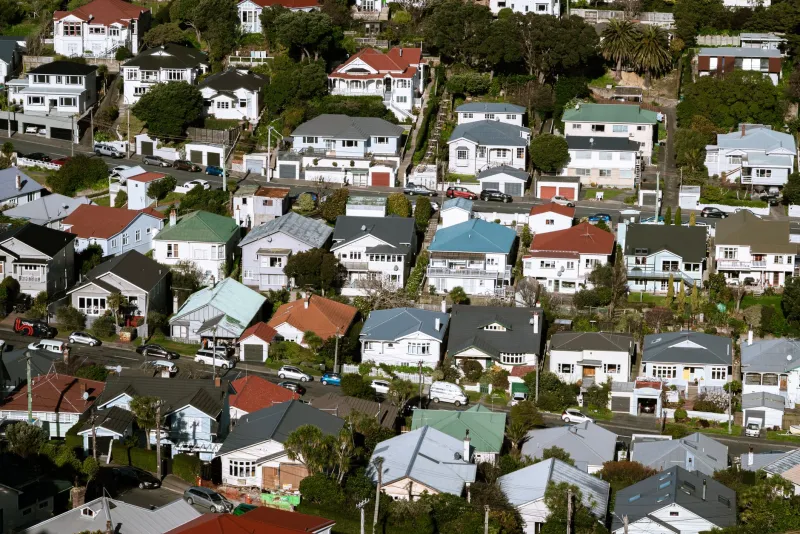
There is a particular kind of financial confidence that many Australians carry across the Tasman. Having navigated one of the world's most expensive property markets, they arrive in New Zealand assuming that their savings — carefully accumulated over years — will afford them a comfortable entry into Kiwi homeownership or, at the very least, a manageable rental situation. For a significant number, that assumption requires rapid revision.
New Zealand's housing market has its own logic, its own pressures, and its own entry barriers. Understanding those distinctions before you relocate is not merely useful — it is essential to building a financially stable life in your new country.
The Price Comparison That Catches Australians Off Guard
At first glance, median property prices in New Zealand can appear more accessible than those in Sydney or Melbourne. And in some regions, that is partially true. However, when Australians begin drilling into the specifics — location, property condition, proximity to employment centres — the apparent affordability often narrows considerably.
Auckland, New Zealand's largest city and the arrival point for many migrants, consistently ranks among the least affordable cities in the world relative to local incomes. Median house prices in Auckland have, in recent years, hovered well above one million New Zealand dollars. For context, NZD does not trade at parity with AUD; the exchange rate typically means your Australian dollars purchase fewer New Zealand dollars than you might intuitively expect, effectively reducing your purchasing power before you have even begun house hunting.
Wellington, Hamilton, and Tauranga each carry their own premium price points, particularly for properties within commuting distance of major employment hubs. Even secondary cities such as Napier, Nelson, and Dunedin — long considered affordable alternatives — have experienced sustained price growth that has compressed the entry-level market.
Mortgage Accessibility: A Different Lending Environment
Perhaps the most unexpected hurdle for newly arrived Australians is not the price of property itself, but the difficulty of securing a mortgage in the early stages of residency.
New Zealand banks assess mortgage applications with considerable scrutiny applied to employment history, credit records, and residency status. As a new arrival — even one holding an Australian passport and a job offer — you may find that lenders require a minimum period of continuous New Zealand employment before they will consider your application favourably. Typically, this ranges from three to six months with the same employer, though requirements vary by institution.
Deposit requirements present a further complication. Under New Zealand's loan-to-value ratio (LVR) restrictions, most owner-occupier borrowers are required to contribute a minimum deposit of 20 per cent. For a property priced at NZD 800,000 — by no means extravagant in many urban centres — that translates to a NZD 160,000 deposit. After accounting for the exchange rate, relocation costs, and the financial buffer required during your initial settlement period, many Australians find that their savings, while substantial by any reasonable measure, fall short of what the lending environment demands.
It is also worth noting that your Australian credit history does not automatically transfer. New Zealand lenders will assess your creditworthiness based on your New Zealand financial footprint, which at the point of arrival is essentially non-existent. Establishing a local credit profile takes time, and this can influence both mortgage eligibility and the terms you are offered.
The Rental Market: Competitive, Costly, and Unforgiving
For most new arrivals, renting is the practical first step — and the rental market in New Zealand's major centres is notably competitive. Vacancy rates in Auckland and Wellington have, at various points, dipped below two per cent, creating conditions in which multiple applicants routinely compete for the same property.
Landlords and property managers typically request references from previous landlords, proof of income, and evidence of stable employment. As someone new to the country, you may lack local rental references, which can place you at a disadvantage relative to applicants with an established tenancy history in New Zealand.
Rental prices themselves can come as a genuine shock. A two-bedroom apartment in central Auckland will frequently command between NZD 600 and NZD 800 per week, depending on location and condition. Wellington's inner suburbs are similarly priced. While regional centres offer more competitive rents, they may not align with your employment or lifestyle requirements.
Bond requirements — typically equivalent to four weeks' rent — must also be factored into your initial cash flow planning, along with advance rent payments that some landlords request at the point of signing.
Regional Variation: Where Your Money Goes Further
Not all of New Zealand presents the same financial landscape, and one of the more productive conversations any prospective migrant can have with themselves concerns flexibility around location.
Regions such as Southland, Manawatū, and parts of the West Coast offer substantially lower median property prices and rental costs. For professionals in healthcare, education, agriculture, trades, and engineering, regional employment opportunities are genuine and often come with additional incentives under New Zealand's regional visa and settlement programmes.
The trade-off, of course, involves lifestyle considerations: access to cultural amenities, airport connectivity, schooling options, and proximity to established Australian expat communities. These are personal calculations, but they are worth making with clear financial data in hand rather than assumptions shaped by urban-centric expectations.
Budgeting for the First 12 Months: A Realistic Framework
Financial advisers familiar with Tasman migration consistently recommend that new arrivals budget for a minimum of 12 months of renting before making any property purchase decision. This period serves several purposes: it allows you to establish employment continuity, build a local credit profile, understand neighbourhood dynamics firsthand, and accumulate the additional savings that the New Zealand lending environment will likely require.
A prudent first-year housing budget should account for the following:
- Bond and advance rent: Budget for up to six weeks of rent as an upfront cost when securing your first rental property.
- Rental costs: Research current median rents in your target region and stress-test your budget against the higher end of that range.
- Utility connections: Many New Zealand rentals require you to establish electricity, internet, and gas connections independently, each of which may involve connection fees.
- Contents insurance: While not legally mandated, it is strongly advisable and an ongoing cost to factor into monthly expenditure.
- Emergency buffer: A minimum of three months of living expenses held in reserve is a sensible standard for anyone navigating a new financial environment.
Making Informed Decisions Before You Depart
The most effective thing an Australian planning to relocate to New Zealand can do is engage with the financial realities of the housing market well before departure. Speak with a New Zealand-based mortgage broker who has experience working with recent migrants. Research rental prices in your target region using current listings rather than anecdotal accounts. Understand the exchange rate implications of your savings and model your purchasing power in NZD rather than AUD.
New Zealand offers a genuinely compelling quality of life, and for many Australians, the move proves to be one of the best decisions they make. However, that outcome is far more likely when it is built on an accurate understanding of what the housing market demands — not on the assumption that familiarity with Australian property automatically translates to readiness for the Kiwi equivalent.
Your savings are an asset. Protecting them begins with knowing exactly what they are worth on the other side of the Tasman.