Behind the Wheel in New Zealand: What Australian Drivers Must Know Before They Hit the Road
Australians moving to New Zealand often assume that driving will be the one aspect of daily life that requires no adjustment. Both countries drive on the left, both use metric measurements, and road signs are broadly familiar. That assumption, however comfortable it feels, deserves some scrutiny. New Zealand's road rules contain several provisions that differ meaningfully from Australian state regulations, and the consequences of getting them wrong — whether through a fine, a demerit, or a collision — are not a welcome introduction to a new home.
How Long Can You Use Your Australian Licence?
As an Australian citizen or permanent resident relocating to New Zealand, you are permitted to drive on your valid Australian driver's licence for up to twelve months from the date you become a New Zealand resident. This applies regardless of which Australian state or territory issued your licence. After that twelve-month window, you are required to obtain a New Zealand licence.
It is important to note that this allowance applies to residents, not tourists. If you enter New Zealand on a temporary visa and later transition to residency, the twelve-month clock begins from the point at which you are granted residency status, not from your initial arrival date. Confirm your specific circumstances with the New Zealand Transport Agency (NZTA) if you are uncertain about when the clock begins.
Converting to a New Zealand Licence
When the time comes to convert, the process for Australian licence holders is more straightforward than for many other nationalities. Because Australia is a recognised country under New Zealand's licensing framework, you are not required to sit a full theory test or practical driving assessment in most cases. Instead, you will need to:
- Provide your current, valid Australian licence
- Complete an application form through NZTA or an authorised agent
- Pass an eyesight test at the time of application
- Pay the applicable fee
- Surrender your Australian licence (a copy will be returned to you)
The New Zealand licence you receive will reflect the class of vehicle you are authorised to drive, equivalent to your Australian entitlements. If you hold an Australian motorcycle endorsement or heavy vehicle licence, ensure you discuss the conversion of those entitlements specifically, as the process may involve additional steps.
The Give Way Rule: A Genuine Difference
Among the road rules that most frequently catch Australian drivers off guard is New Zealand's give way rule at uncontrolled intersections. In most Australian states, the rule at an uncontrolled intersection requires drivers to give way to vehicles approaching from the right. New Zealand follows the same general principle, but the specific application at T-intersections differs in ways that are subtle enough to be dangerous if misunderstood.
At a T-intersection in New Zealand, a driver on the continuing road must give way to vehicles turning into that road from the terminating road if those vehicles are turning right. This reversal of priority compared with some Australian interpretations has historically been a source of confusion. New Zealand revised this rule in 2012 to bring it closer to international norms, but if you learned to drive before that change or in a state with different local conventions, it is worth reviewing the current New Zealand Highway Code before you drive regularly.
Speed Limits and Urban Driving Conditions
New Zealand's default open road speed limit is 100 km/h, consistent with most Australian states. The default urban speed limit is 50 km/h, also consistent. However, New Zealand has been progressively lowering speed limits on many urban and suburban roads to 30 km/h or 40 km/h in recent years as part of its road safety strategy. These reduced limits are more prevalent in New Zealand cities than in most Australian equivalents, and they are enforced.
School zones operate at 40 km/h during set hours, and variable speed limit signs — which display different limits at different times of day — are increasingly common. Pay attention to signage rather than relying on memory of a particular road's limit.
The Demerit Points System
New Zealand operates a demerit points system that has some structural differences from the systems used in Australian states and territories. In New Zealand, accumulating 100 or more demerit points within a two-year period results in a three-month licence suspension. The threshold is lower than in several Australian jurisdictions, meaning that a series of relatively minor infringements can reach the suspension threshold more quickly than some Australian drivers expect.
Common offences that attract demerit points include speeding, failing to wear a seatbelt, using a mobile phone while driving, and running red lights. Drink-driving carries its own separate penalties and does not operate through the demerit system in the same way. New Zealand's legal blood alcohol limit for drivers aged 20 and over is 50mg per 100ml of blood — the same as Australia's national limit — but enforcement culture and roadside testing frequency may feel more prominent in some regions.
Vehicle Registration and Warrant of Fitness
If you are importing a vehicle from Australia or purchasing one in New Zealand, you will need to register it with NZTA. New Zealand requires all vehicles to hold a current Warrant of Fitness (WoF), which is a periodic vehicle safety inspection. Unlike Australia's variable state-based roadworthy certificate systems, New Zealand's WoF applies nationally and is required every twelve months for vehicles older than three years, and every six months for older vehicles.
Vehicles imported from Australia must meet New Zealand's entry certification requirements, which include compliance with local safety and emissions standards. The process involves an inspection by an approved vehicle inspection organisation. If you plan to bring your car from Australia, obtain a cost estimate for entry certification before shipping, as compliance modifications can add unexpected expense.
Road Conditions and Regional Driving Realities
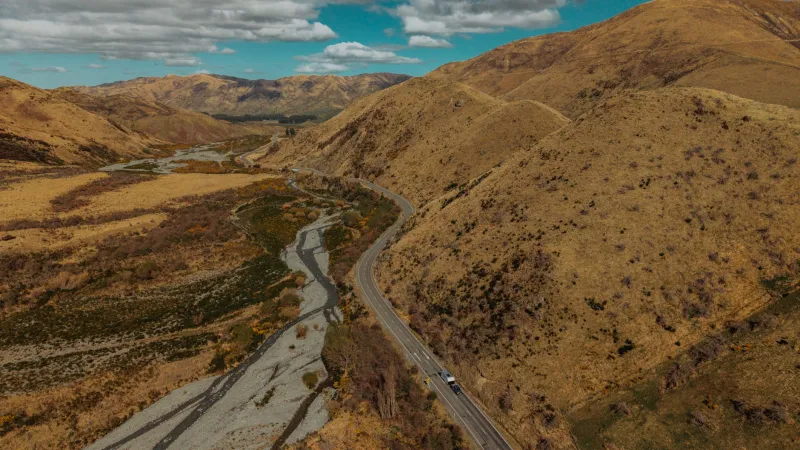
New Zealand's topography creates driving conditions that differ markedly from the flat, wide highways of much of Australia. Mountain passes, single-lane bridges, unsealed rural roads, and steep coastal routes are common features of New Zealand driving — particularly on the South Island and in regional areas. Single-lane bridges, in particular, require drivers to assess oncoming traffic and yield according to posted priority signs. These are rare in Australia and can be disorienting at first.
Winter driving in the South Island and central North Island may require snow chains on certain alpine routes. If you are relocating to a region with significant elevation, familiarise yourself with chain fitting and local road conditions before the first cold season arrives.
Approaching New Zealand roads with genuine curiosity rather than assumed familiarity is the most practical attitude an Australian driver can adopt. The differences are not dramatic, but they are real — and recognising them early makes for a safer, more confident start to life on New Zealand roads.