City Buzz or Country Calm? Where Australian Migrants Actually Settle in New Zealand — and Why
New Zealand is a small country with an outsized variety of places to call home. From the dense urban energy of Auckland to the alpine character of Queenstown, the surf-town ease of Mount Maunganui to the cultured calm of Nelson, the country offers a genuinely diverse range of environments — each with its own social texture, economic profile, and degree of openness to newcomers.
For Australians weighing up where to land, the instinct is often to follow the job. But settlement success — the kind that involves actually feeling at home, building friendships, and wanting to stay — depends on a broader set of factors that deserve equal attention. This guide examines those factors honestly, and considers what different regions offer Australians at different life stages.
Why Location Choice Matters Beyond Employment
New Zealand's relatively compact size can create the impression that regional differences are minor — that Auckland, Hamilton, and Christchurch are broadly interchangeable with a few geographic variations. In practice, the differences in community culture, social pace, cost of living, and migrant integration experience are significant enough to fundamentally shape your experience of the country.
Australia's major cities — Sydney, Melbourne, Brisbane — are large and cosmopolitan enough that newcomers can find their community relatively quickly within an established social ecosystem. New Zealand's cities are considerably smaller, and its regional towns smaller still. This means that the social environment you choose has a more direct bearing on your day-to-day wellbeing than it might in a larger country.
Auckland: The Familiar and the Frustrating
For many Australians, Auckland is the default choice. It is New Zealand's largest city, home to the majority of the country's international migrants, and the most economically diverse job market in the country. It is also, in many ways, the most Australian-feeling of New Zealand's cities — fast-paced, multicultural, and relatively anonymous in the way that large cities tend to be.
This familiarity can be both a comfort and a limitation. Australians who settle in Auckland often find it easier to integrate socially — there is an established community of Australian expats, a wide range of cultural and culinary options, and a pace of life that feels broadly recognisable. However, Auckland also carries the highest cost of living in New Zealand, with property prices and rental costs that have, until recently, rivalled those of Australian capital cities.
The social experience in Auckland can also feel somewhat transient. It is a city where people move frequently — between suburbs, between jobs, and between countries — and building the kind of deep community connection that characterises New Zealand's smaller centres can take longer than expected.
Best suited to: Professionals in finance, technology, media, or corporate sectors; those who prioritise cultural diversity and urban amenity; Australians who want a familiar environment while they find their footing.
Wellington: Small City, Large Cultural Life
Wellington is, by many measures, the city that surprises Australians most favourably. Compact enough to walk across in 40 minutes, it nonetheless carries a cultural richness — in arts, food, music, and civic life — that belies its size. As the seat of New Zealand's government and home to a large public sector workforce, it attracts educated, engaged professionals and has a distinctly progressive social character.
For Australians, Wellington offers a relatively easy social integration experience. The city is small enough that communities form quickly, and its café and hospitality culture creates abundant informal gathering spaces. The weather is Wellington's most consistently cited drawback — it is famously windy and wetter than many Australian cities — but residents tend to develop a stoic affection for it.
Housing costs in Wellington are meaningfully lower than Auckland, and the commute times are a fraction of what Sydney or Melbourne residents are accustomed to. This combination of urban quality and reduced cost of living makes Wellington a compelling option for Australian professionals, particularly those in policy, public administration, technology, or the creative industries.
Best suited to: Public servants, policy professionals, creatives, and those who value walkability and a tight-knit urban community.
Christchurch: Opportunity in a Rebuilding City
Christchurch presents a distinctive proposition for Australian migrants. The city's ongoing rebuild following the 2010 and 2011 earthquakes has created sustained demand across construction, engineering, healthcare, and urban planning — and has attracted a generation of professionals drawn to the challenge of building something new.
The result is a city with a younger, more transient professional population than its pre-earthquake incarnation, and a social environment that can be more open to newcomers than more established centres. Housing remains more affordable than Auckland or Wellington, and the surrounding Canterbury region offers exceptional access to outdoor recreation, from skiing to cycling to coastal walking.
Christchurch's social culture is broadly conservative by New Zealand standards — it is sometimes described as the most "English" of New Zealand's cities — which some Australians find familiar and others find limiting, depending on their background and social preferences.
Best suited to: Engineers, construction professionals, healthcare workers, and those drawn to outdoor lifestyle with urban access.
Regional Towns: High Reward, Higher Stakes
New Zealand's regional towns — places like Whanganui, Gisborne, Invercargill, and Timaru — offer something that no major city can match: genuine community. In a small town of 30,000 to 60,000 people, newcomers become known quickly, local institutions (sporting clubs, community organisations, schools) provide ready-made social structures, and the pace of life is measurably slower.
For Australians with families, these environments can be particularly appealing. Schools are less crowded, outdoor space is abundant, and the cost of housing is dramatically lower — in some regional centres, comfortable family homes can be purchased for a fraction of equivalent Australian prices.
However, regional settlement carries real risks that should be considered honestly. Job markets are narrower, and if your employment situation changes, options may be limited without relocating again. Social conservatism can be more pronounced in smaller communities, and the distance from major urban centres — for specialist healthcare, cultural events, or family visits — can become wearing over time.
Some regional councils in New Zealand have established active migrant welcome programmes and settlement support services, recognising that attracting skilled workers to regional areas is a policy priority. Australians considering regional settlement should research whether their target location has this kind of infrastructure in place.
Best suited to: Families with school-age children, those in healthcare or education, retirees, and lifestyle-motivated migrants who are prepared for a genuine change of pace.
Queenstown: Lifestyle Capital With a Cost
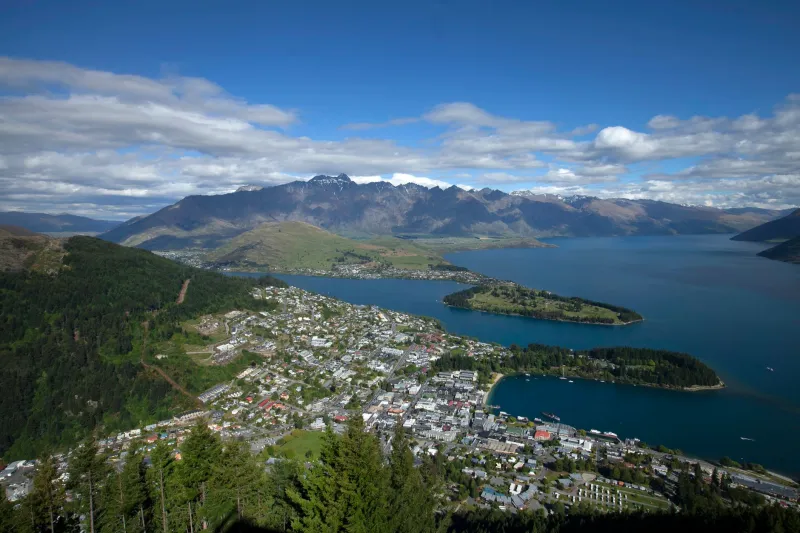
Queenstown occupies a unique position in New Zealand's settlement landscape. It is, without question, one of the most scenically spectacular places in the country — and one of the most expensive. Housing costs relative to local wages are among the most challenging in New Zealand, and the town's economy is heavily oriented toward tourism, hospitality, and outdoor recreation.
For Australians who visit Queenstown and fall in love with it, the temptation to relocate there is understandable. The reality of permanent settlement, however, requires a clear-eyed assessment of your income prospects in a town where professional career pathways outside tourism and property are limited.
That said, for those with remote-working arrangements, established businesses, or roles in healthcare, education, or trades, Queenstown and the broader Otago/Southland region offer an extraordinary quality of life.
Making the Decision: Questions Worth Asking
Before committing to a location, consider the following:
- What does your social life actually require? If you thrive on cultural variety, anonymity, and a large pool of potential friends, a major city is likely a better fit than a regional town.
- What is your plan if your job changes? In a smaller market, career pivots require more planning.
- What life stage are you in? The needs of a single professional in their 30s differ substantially from those of a family with young children or a couple approaching retirement.
- Have you visited outside of holiday mode? Spending a week in a place as a tourist is a very different experience from living there year-round.
New Zealand's diversity of environments is one of its genuine strengths as a destination for Australian migrants. The country is small enough to explore thoroughly before committing to a region — and most Australians who have relocated will tell you that doing exactly that, before signing a lease or accepting a job offer, is time very well spent.